
Our Process
-

Plan
Together, we outline a brief documenting your requirements that’s realistic, strategic, and tailored to your specific needs.
-

Collaborate
You’re part of the process. We keep communication open and decisions shared—no black boxes or surprises.
-

Adapt
Every project is different. We stay flexible and responsive to make sure the process fits your flow—not the other way around.
-

Deliver
When we deliver, it’s not just a finished product—it’s a solution you can trust, backed by real care and effort.
Where applicable we will align our activities to the RIBA Plan of Work
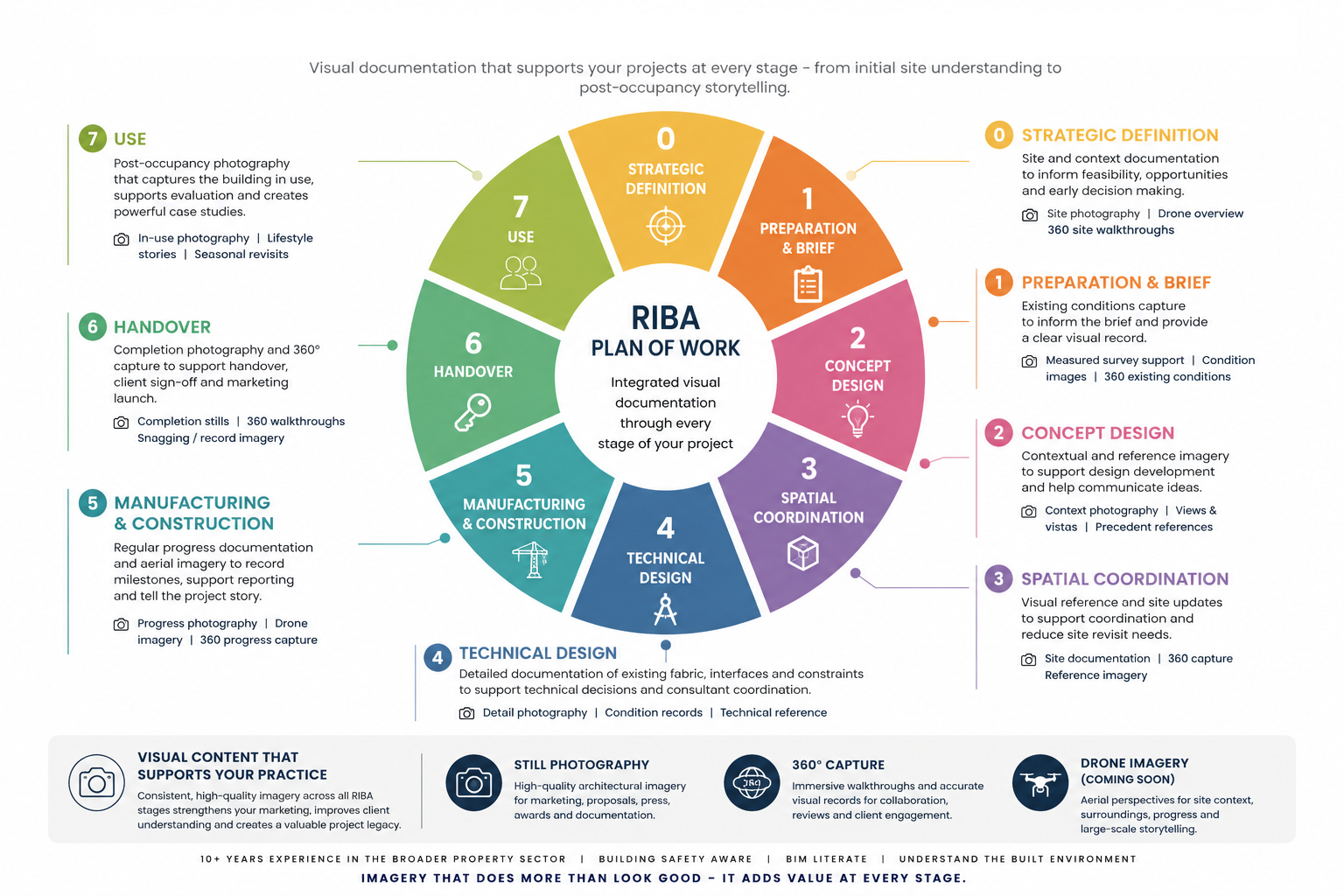
Imaging through the RIBA Stages
Imaging aligned to RIBA
-
Imaging roles:
existing site photography
site context capture
aerial/drone overview
360 site walkthroughs
neighbouring properties / streetscape documentation
Purpose:
baseline understanding
feasibility discussions
stakeholder alignment
remote review by consultants/clients
Value proposition:
early-stage visual due diligence and site familiarisation.
-
Imaging roles:
measured-survey support imagery
condition photography
existing building documentation
360 internal capture for reference
asset cataloguing
Purpose:
briefing support
client decision-making
consultant coordination
Useful especially for:
refurbishments
heritage
existing residential stock
Value proposition:
early-stage visual due diligence and site familiarisation. existing conditions documentation to support briefing and project setup.
-
Imaging roles:
measured-survey support imagery
condition photography
existing building documentation
360 internal capture for reference
asset cataloguing
Purpose:
help communicate design intent
support narrative around site and opportunity
This is where architects often need:
site images packaged cleanly into presentations or reports.
Value proposition:
Documentation
Golden Thread narrative for relevant buildings
-
Imaging role:
updated site/site-progress imagery
coordination reference photos
existing constraints documentation
consultant reference material
360 is particularly useful:
teams can revisit spaces remotely.
Purpose:
reduce repeated site visits
improve coordination accuracy
Value proposition:
visual reference assets supporting design coordination.
-
Imaging role:
construction details documentation
existing fabric conditions
record photography
access/constraint imagery
For certain projects:
Building Safety documentation support
BIM-linked visual records
Purpose:
Documentation of site
Value proposition:
Documentation
-
Imaging role:
construction progress photography
milestone capture
contractor documentation
drone progress imagery
issue tracking / condition records
360 progress capture
Purpose:
progress records
stakeholder reporting
client updates
marketing content pipeline
Value proposition:
scheduled monthly/phase-based documentation
-
Imaging role:
final completion photography
styled interior/exterior stills
360 final walkthrough
snagging/condition records if needed
Purpose:
client handover materials
archive
marketing prep
Value proposition:
This is where most photography lives—but shouldn’t be the whole story.
-
Imaging role:
occupied project photography
post-occupancy documentation
user experience storytelling
seasonal revisits
long-term case study content
Purpose:
richer case studies
evidence of project success
marketing longevity
This can produce stronger storytelling than pristine handover images alone.
Example:
“home in use six months after completion.”
Value proposition:
Complements Stage 6 and creates completeness for Awards and Marketing work
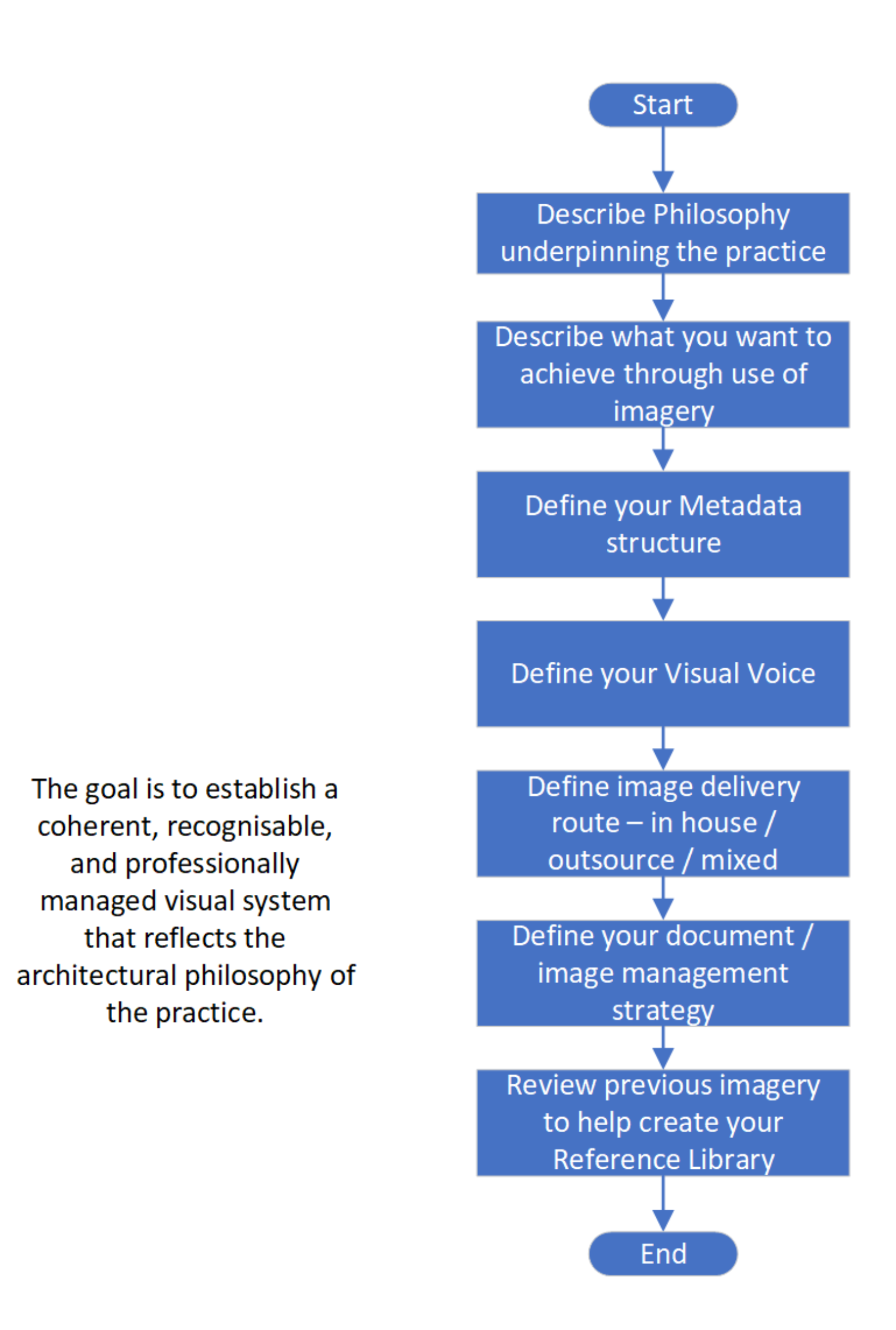
Step 1 - Define your visual strategy - we will provide a comprehensive strategy to base this on and work through this with you
Step 2 - Run a pilot project to prove the strategy based on either a ‘desk’ exercise for a completed project or a current live project
Step 3 - Based on one of your current projects create the following outputs
Create a plan for the production of visual outputs
Based on the current RIBA stage the project is at and work forwards from there, aligning the Visuals plan with your plans
Based on both the Visual Strategy and the alignment of imagery to the RIBA stages, create an image capture brief describing what you want and in what format
Capture the visuals, edit and provide draft copies for review and markup
Create the final outputs and supply